StratAGEic: APRe! Interview on Strategic Litigation
Although ageism is one of the most widespread forms of discrimination, there is limited caselaw prompting legal and social change for equal treatment in old age. Most older people’s organisations have not yet used the potential of strategic litigation (lawsuits for societal change), thus missing an important opportunity to defend and promote human rights in old age. The new StratAGEic project aims at training older people and their association to the use of the EU Charter of Fundamental Rights in strategic litigation.
The project has concluded its mapping exercise, and its partners conducted a series of focus groups and interviews in Greece (thanks to People Behind), Cyprus (thanks to Cyprus Third Age Observatory), in Poland (thanks to Bonum Vitae), in Portugal (thanks to APRe!) and at EU level (via AGE Platform Europe). The results, coordinated by ENIL – the European Network on Independent Living, reinforce the need for raising awareness on strategic litigation for older people’s rights and shed lights on the many facets of rights’ limitation lived in old age.
APRe! Interview on Portuguese National Television on the StratAGEic Project
This month we would like to share the passionate presentation done by Maria Rosário, President of APRe! In this video (in Portuguese), she introduces the EU Charter of Fundamental Rights and highlights the unfortunate prevalence of age-related discrimination in Portuguese society.
She provides concrete examples of age discrimination and highlights the broader impact of ageism on society to all generations, particularly for older people. These include being denied the purchase of a vehicle at the age of 80, refusal of consumer credit applications due to age, life insurance policies linked to housing loans expiring after the age of 70 or becoming disproportionately expensive, age limits on travel insurance, and instances of ageism in medical care.
Maria Rosário Gama also speaks about the StratAGEic project, which focuses on the importance of strategic litigation, aimed at achieving systemic legal change rather than addressing only individual cases in court. She emphasizes that “dignity does not end at 65” and calls on Portuguese viewers to contact APRe and share further real-life examples of age-based discrimination that could support the project.
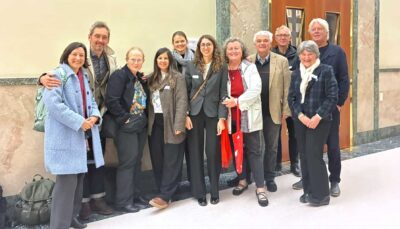
Congratulations to APRe!’s President and team, including the nice choir, for their support! That national emission registers an average daily audience between 150,000 and 250,000 viewers and we hope that many people heard about this starting work on strategic litigation.