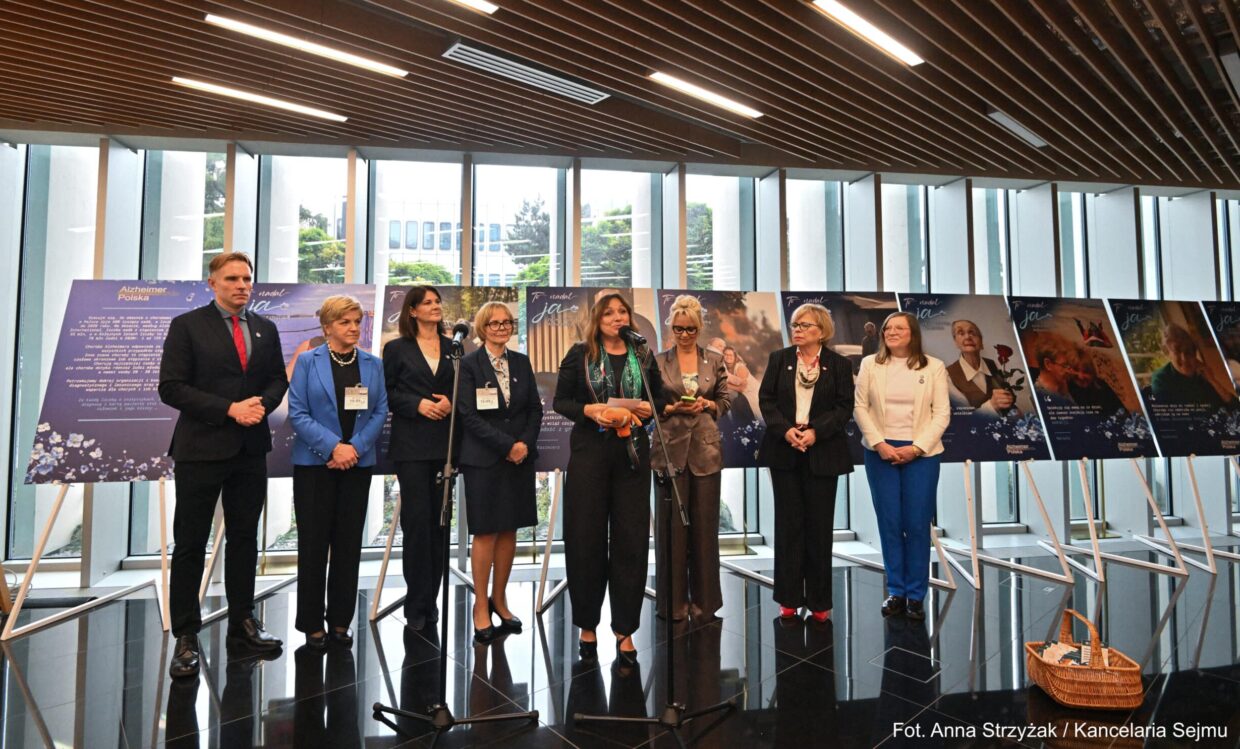
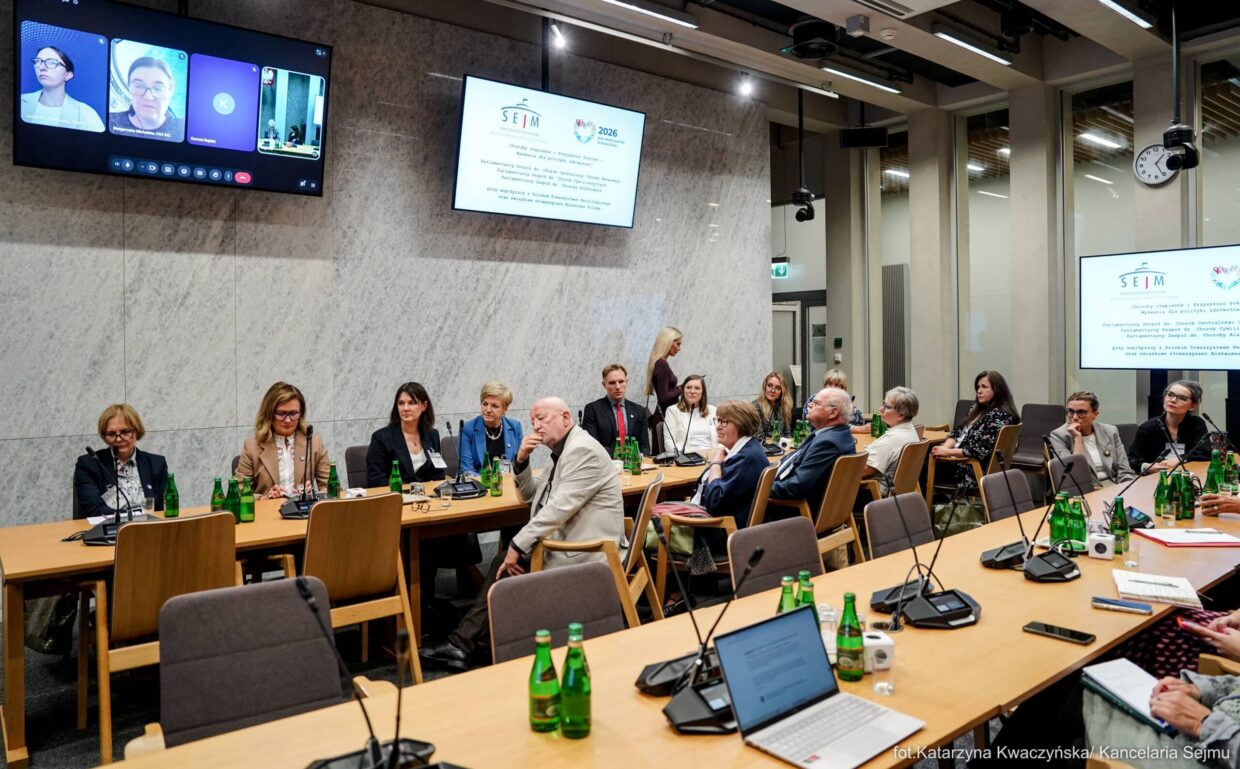
On 21 September, the 10th Annual Jubilee Conference at the Office of Human Rights Commissioner took place. It was the corner stone event titled “Creating a Friendly Environment for Persons Living with Dementia: Knowledge – Support – Cooperation.” The event focused on building dementia-friendly communities and improving systemic support networks for family caregivers.
The event was opened by the Human Rights Commissioner Mrs. Sylwia Gregorczyk-Abram who took office in July 2026. She said that, like the previous Commissioners, she would continue the activities for better protection of rights of persons with disabilities and those living with cognitive disorders.
In the first part of the Conference, professor Tomasz Gabryelewicz, a well-known psychiatrist and the founder of the Polish Alzheimer’s movement, talked about innovations and opportunities in early diagnosis, pointing to the role of biomarkers which would speed the so far lengthy process and enable persons living with dementia planning the future.
Alzheimer Polska raised public awareness about the newly launched free national Helpline (800201801). It provides a unique value for persons with dementia, their families as well as for professional caregivers, including for legal, psychological, and occupational therapy guidance for families struggling to find local, post-diagnosis assistance.
The importance of respite and day care was presented by Mrs. Elzbieta Bogucka-Litynska. Such day care centres addressed and tailored to the needs of persons with cognitive impairment, including dementia, offer respite to families, and prolong independence of persons with dementia, prevent their isolation and loneliness.
The second part of the conference focused on activities offered to persons with dementia by cultural institutions, such as museums and libraries. Examples of how such institutions can raise awareness, integrate local communities, fight with stigmatisation, and provide support were presented.