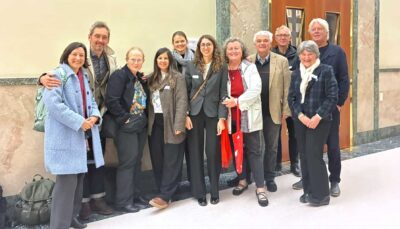
On 4 November 2025, AGE Platform Europe (AGE) participated in the final stakeholder conference of the EU-funded FutuRes project, in which it has been actively involved since 2023.
The event was the opportunity to present the project’s research findings, while reaffirming the need for an EU Action Plan to Combat Ageism within the future EU Intergenerational Fairness Strategy – meant to be published by the European Commission in early 2026. More than 100 stakeholders joined the discussions on demographic change, resilience and intergenerational fairness from both research and policymaking perspectives.
Key policy insights to strengthen demographic resilience
The FutuRes project identifies four priority areas to build more resilient societies:
- Families and communities: comprehensive childcare, affordable housing and work-life balance policies shape resilience across the lifecourse.
- Migration: sustaining labour supply and fostering innovation also through labour markets that are inclusive of migrants.
- Longer working lives: promoting age-friendly workplaces and lifelong learning to support older adults’ participation in the workforce.
- Automation and artificial intelligence (AI): leveraging technological innovation and preparedness so that AI complements rather than replaces human labour.
The New Intergenerational Contract: Social Policy for Europe’s Demographic Transition
In the closing panel, Maciej Kucharczyk, Secretary General of AGE joined representatives of the European institutions – Deša Srsen (European Commission), Idoia Mendia (Member of the European Parliament), Christa Schweng (European Economic and Social Committee) – and the Coordinator of the FutuRes project Arnstein Aassve, Bocconi University, to discuss how social policy can help demographic transition, maintain well-being and prevent political discontent.
The discussion was moderated by one of our AGE members, Bridget Penhale, from the Older Women’s Network Europe. During the discussion, Maciej highlighted that the most promising policy strategies to counter effects of demographic change was to have an EU Action Plan to Combat Ageism on the European level and a UN Convention on the Rights of Older Persons, which would set binding legal standards, drive policy change and empower older persons globally.
Both the Action Plan and the Convention support equality across the lifespan and offer promising pathways to counter polarisation and strengthen a European Union united in its diversity.
- More information about FutuRes can be found on its webpage.
- For more information on the key research findings of the FutuRes project, have a look at A Resilient Future of Europe Discussion paper.