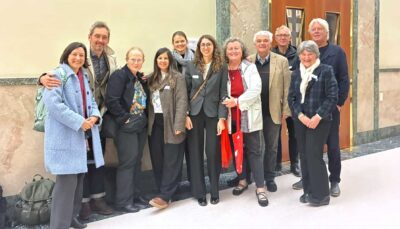
The EP Intergenerational Forum is committed to building a Europe that turns increasing longevity into an opportunity to create societies where all generations can thrive, in full respect of their rights and are enabled to participate in society.
The EP Intergenerational Forum welcomes the publication of the Commission’s first Intergenerational Fairness Strategy as an important step towards achieving this vision. However, members of the Forum believe the Strategy could be further strengthened by articulating a clearer and more comprehensive policy vision on ageing.
The Forum, together with several civil society organisations, has consistently highlighted the value of developing a dedicated and comprehensive framework addressing older age. The Green Paper on Ageing led to the EU Care Strategy, a very welcome development, but which focuses only on long-term care, while not yet fully addressing key policy areas such as employment of older people, prevention, housing, transport, and many others. Similarly, the Demography Toolbox seems to mainly categorise Member States’ actions, rather than setting out a clear vision to coordinate different policies related to ageing.
The Intergenerational Forum welcomes the inclusion of key challenges related to ageing, including those linked to the labour market, care systems and age discrimination, the emphasis on the need to invest into lifelong learning, promote flexible work arrangements and advance age-friendly communities, so that demographic change becomes an opportunity for all generations. It also welcomes the establishment of a Demography Forum and the preparation of a compendium of best practices on age discrimination and the longevity roadmap.
However, key to these commitments is the active implementation under a common, high)-level coordination, otherwise the risk of a fragmented and uneven approach to ageing persists. In contrast, the Commission has developed more exhaustive strategies developed for other population groups.
The European Commission’s study on ageism, released in January 2026, also emphasises the need for comprehensive action. We very much welcome the proposed index and efforts to improve measurement and accountability. Nevertheless, we are concerned about how such an index might be used in practice. It will be important to ensure that the index is designed and implemented in a way that strengthens solidarity and avoids unintended competitive narratives between generations.
The members highlight that the introduction of a new European Day on Intergenerational Fairness in November only introduces confusion and duplication with the existing European Day of Solidarity between Generations on 29 April, celebrated since the European Year on Active Ageing and Solidarity between Generations 2012 (Decision 940/2011/EU, recital 25).
The Strategy places a strong and important emphasis on young people. At the same time, further attention to the specific needs of older persons would ensure a truly balanced intergenerational approach.
Long-term thinking is both positive and necessary. To fully realise its ambition, it should also be reinforced by concrete steps that consolidate and expand the rights framework for older persons today. As our societies experience the opportunity of increasing longevity, the Forum encourages the Commission President to develop an overarching strategy to fully realise its benefits, notably by:
- Prioritising the adoption of the Horizontal Equal Treatment Directive and taking additional initiatives to ensure equal treatment for people of all ages, in all their diversity. This should include collecting more age-disaggregated data, developing guidance and reviewing existing laws and practices, particularly in light of digitalisation and cross-border mobility
- Establishing the International Day of Older Persons as an annual EU-level occasion to highlight older people’s rights, foster their participation, and share data and good practices across Member States and celebrate the EU Day on Solidarity between Generations on 29 April more consistently
- Developing comprehensive policies to promote age-friendly labour markets, addressing structural barriers to older people’s employment and reinforcing access to lifelong learning
- Establishing a framework to ensure adequate minimum pensions and income security throughout the life course, in line with the efforts of the European Commission to prevent and reduce poverty in the EU
- Setting clear standards for the recognition of unpaid care work in employment and pension systems, ensuring that caregiving responsibilities do not lead to long-term economic disadvantage
- Monitoring and encourage investment into the transformation and upscaling of long-term care services, supporting a shift towards more person-centred approaches and strengthening, home and community-based care in full compliance with the UN Convention on the Rights of Persons with Disabilities (UNCRPD).
- Playing an active and positive role in the international process to draft a UN Convention on the Rights of Older Persons, and develop EU guidelines to combat ageism in external action, including humanitarian aid and development cooperation
- Launching a public awareness campaign to challenge age stereotypes and promote intergenerational solidarity
- Strengthening coordination across EU policies to ensure better outcomes throughout the life course, by exploring and reinforcing the links between areas such as transport, housing, regional policy, accessibility and digitalisation. This should be supported by the creation of a dedicated Task Force within the European Commission to ensure coherent and strategic action on ageing.
The EP Intergenerational Forum stands ready to actively contribute to the development of such a strategy, ensuring that the EU’s policy responses are aligned with the ongoing ageing of our populations and the opportunities it offers.
Signed:
MEP Idoia Mendia | MEP Michal Szczerba | MEP Gordan Bosanac
Co-chairs of the Intergenerational Forum
What is the Intergenerational Forum?
It is a forum for all democratic, pro-European parties in the European Parliament to address ageing, longevity, healthy ageing, older persons’ rights, social inclusion, and intergenerational solidarity, with the participation of AGE Platform Europe.
The group includes around 35 Members of the European Parliament and welcomes new members.
Useful links
Contact

Philippe Seidel Leroy
Policy Manager on Social and Economic policies and European Parliament Liaison