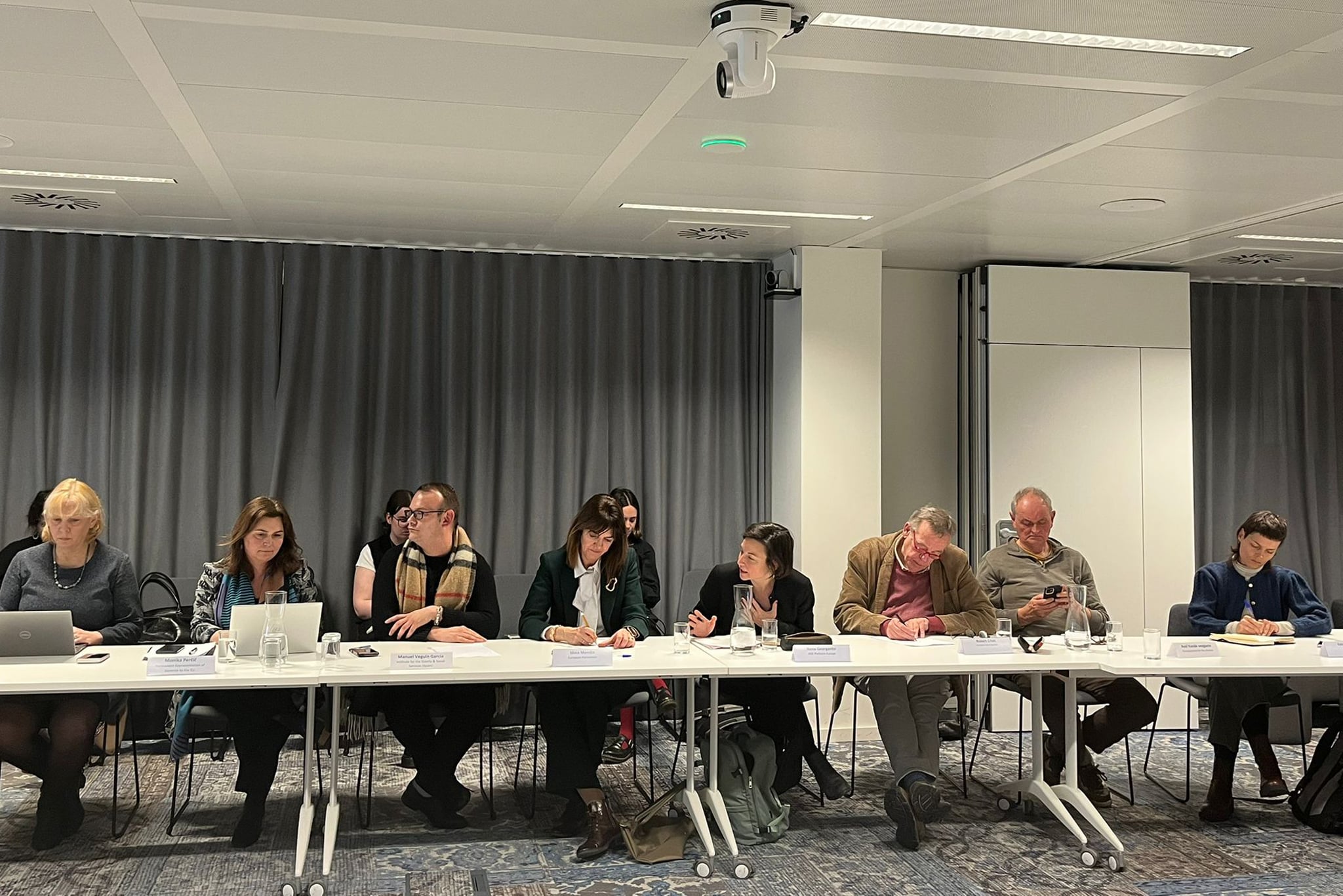
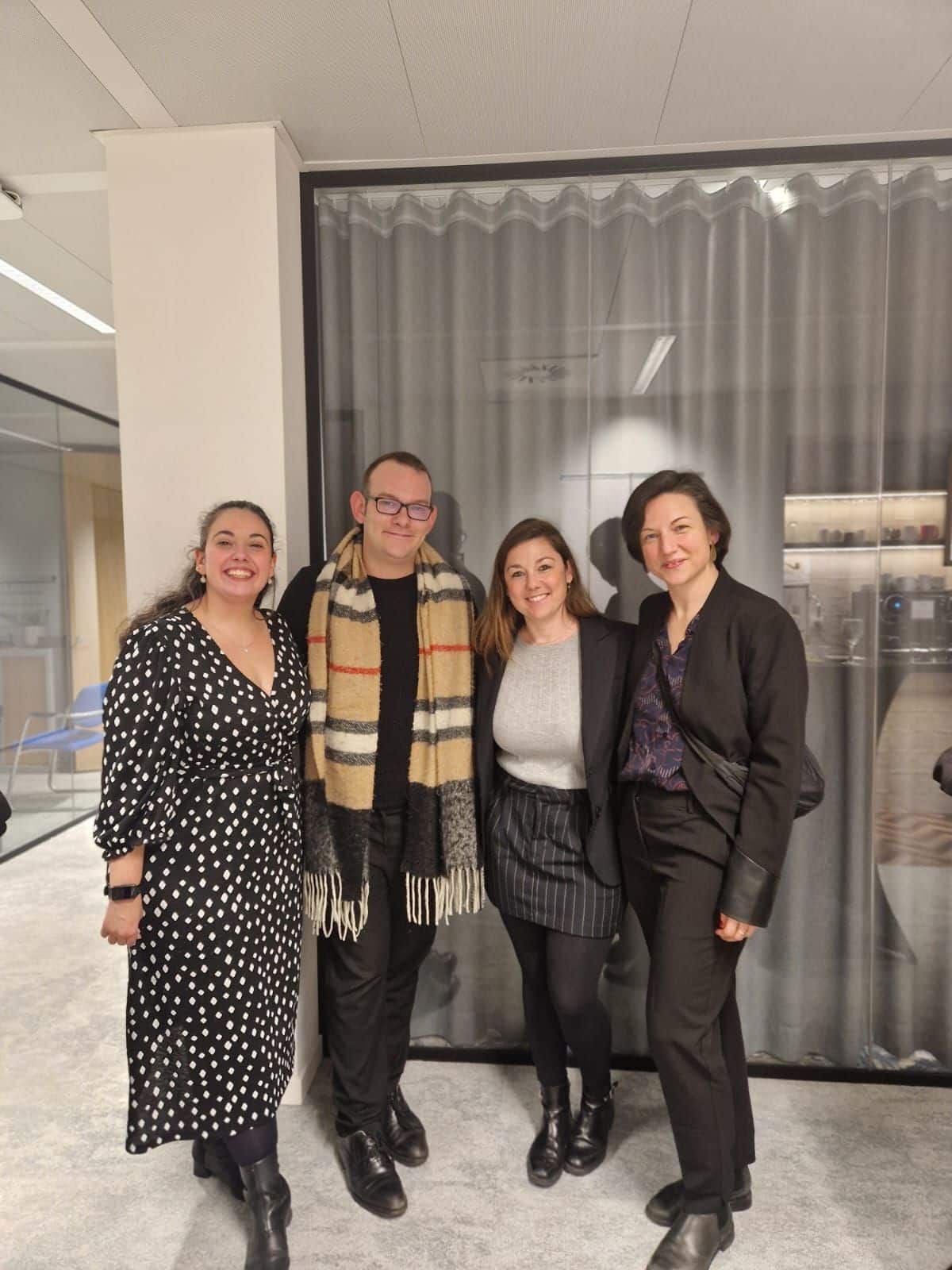
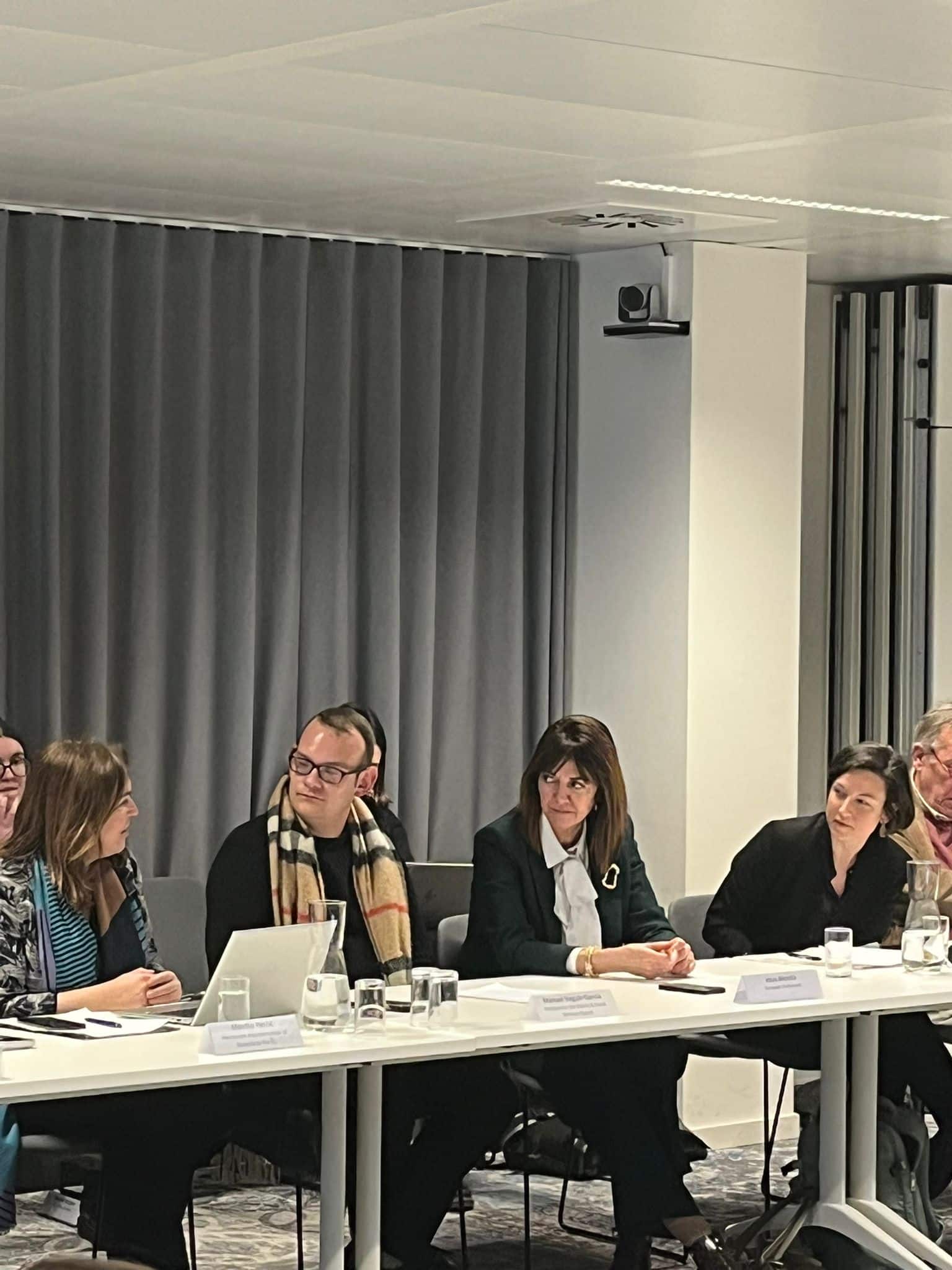
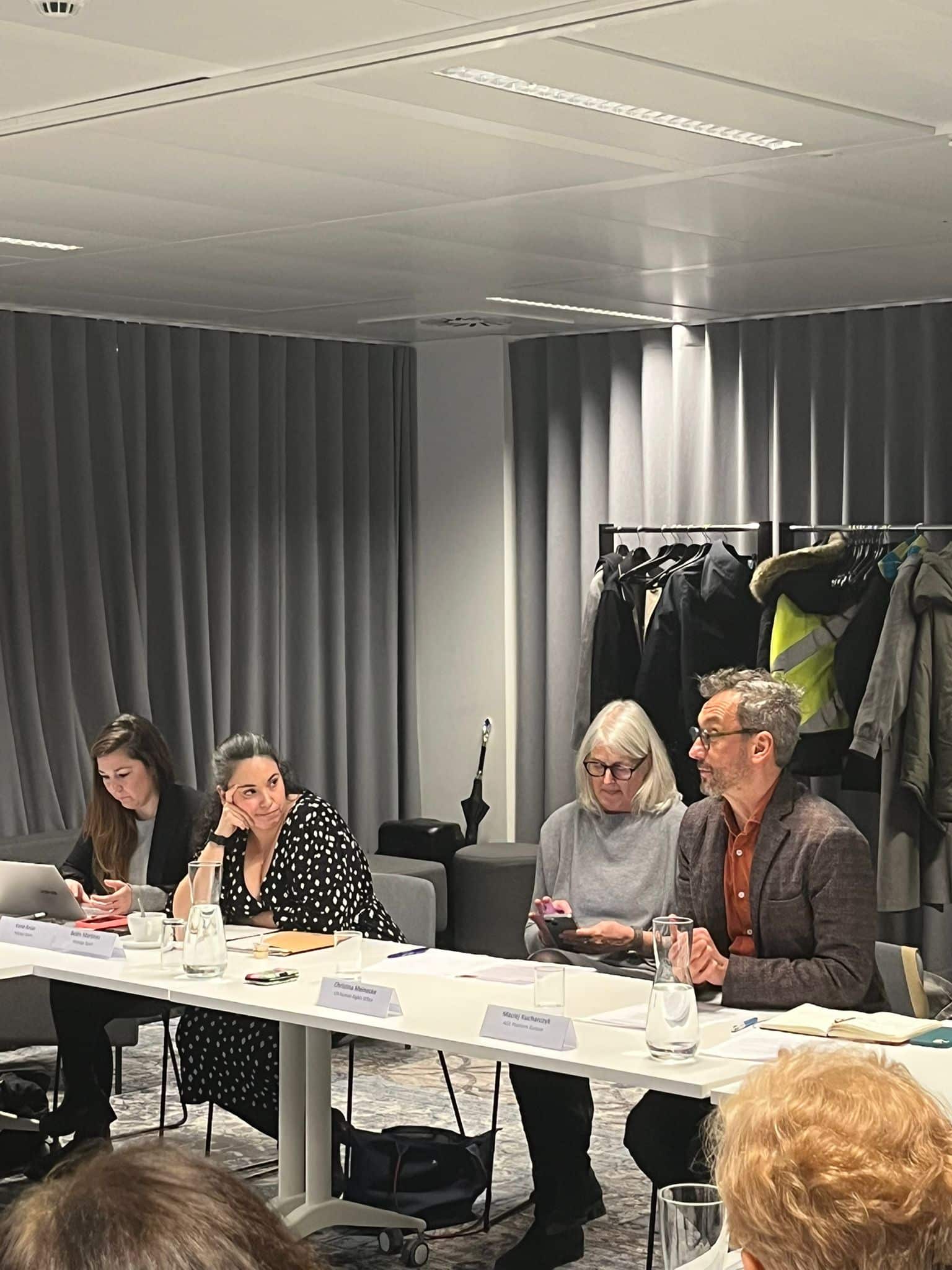
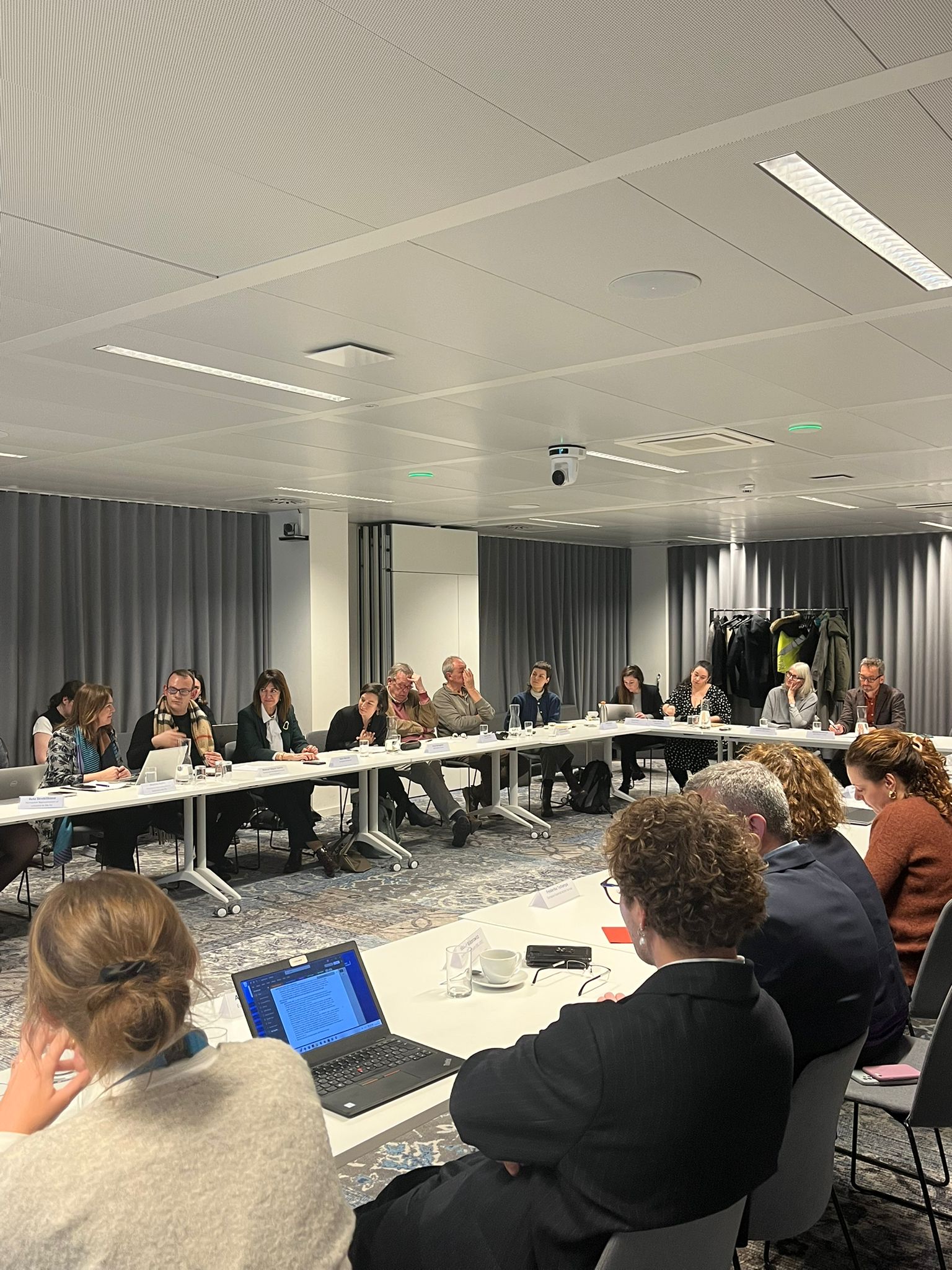
On 27 January 2026, AGE Platform Europe joined forces with the Regional Office for Europe of the UN Office of the High Commissioner for Human Rights to organise a Regional Working Meeting on building momentum and strengthening regional collaboration around the forthcoming legally binding UN instrument on the rights of older persons.
The meeting was opened by Christina Meinecke, UN Human Rights Regional Representative for Europe, who highlighted the historic opportunity created by the establishment of the Intergovernmental Working Group (IGWG) to address long-standing gaps in the international protection of older persons’ rights through a legally binding instrument.
Maria Toumazou, Social, Equality and Housing Attaché at the Permanent Representation of Cyprus to the EU, underlined that “demographic change makes it essential that older persons’ rights remain high on the EU political agenda”.
Lessons from the Convention on the Rights of Persons with Disabilities (CRPD): the role of civil society
Professor Gerard Quinn, former UN Special Rapporteur on the rights of persons with disabilities, reflected on key lessons from the negotiations of the Convention on the Rights of Persons with Disabilities (CRPD). He underlined that the active involvement of civil society organisations, particularly Disabled Persons’ Organisations (DPOs), was central to the Convention’s success, reflecting the principle of “nothing about us without us.”
He explained that strong coordination among DPOs helped build consensus and ensured negotiations focused on removing barriers to the equal enjoyment of existing human rights. Organisations representing people with disabilities were key drivers of the paradigm shift towards autonomy, equality and personhood that made the CRPD transformative rather than purely technical.
AGE Secretary General, Maciej Kucharczyk, challenged the idea that treaty-making should rely primarily on academic or technical expertise rather than lived experience.
He stressed that older persons’ participation must be continuous throughout the negotiations to ensure it is meaningful rather than symbolic.
The role of the European Union
Several speakers talked about the strategic opportunity that the treaty negotiations present for the European Union. UN Independent Expert, Claudia Mahler, emphasised that EU Member States, as human rights champions, must actively participate in the negotiations to uphold the EU acquis and EU values. Manuel Veguín García, Head of International Relations at IMSERSO (Spain), noted that “we are at a pivotal moment for global ageing policies, offering a unique opportunity for multilateralism”.
Idoia Mendia, Member of the European Parliament and Co-Chair of the European Parliament Intergenerational Forum, stressed that EU engagement is essential. While the EU has developed numerous strategies and good practices to combat discrimination, she noted that the absence of a comprehensive legal instrument specifically addressing the rights of older persons makes these issues difficult to prioritise politically.
In a European context marked by rapid population ageing, speakers underlined that the EU has both the legitimacy and the responsibility to play an active role. They also highlighted the role of the European Commission, as guardian of the Treaties, in ensuring that the EU Charter of Fundamental Rights is fully unpacked and meaningfully applied in the treaty drafting process.
Why a global convention matters
Aoife Nolan, President of the Council of Europe’s Committee of Social Rights, emphasised that no regional system could substitute for a global human rights treaty. Drawing lessons from disability, women’s and children’s rights treaties, she highlighted the potential of a UN convention to raise awareness, empower rights-holders and support practitioners worldwide, particularly in contexts where awareness of older persons’ rights remains limited.
Across interventions, speakers stressed that the ultimate goal is a paradigm shift in how societies perceive older persons: from passive recipients of care and welfare to full rights-holders throughout the life course.
Next steps in the IGWG process
Chitralekha Marie Massey, Chief of the Section on the Rights of Older Persons at OHCHR, recalled that three IGWG meetings are planned for 2026. In addition to the session scheduled for 18–20 February 2026, further meetings will take place on 13–17 July 2026 and 26–28 October 2026, in person in Geneva.
Summing up the discussions, Maciej Kucharczyk, underlined that:
On 28 January 2026, AGE Platform Europe, together with the UN Independent Expert, met with the Council Working Party on Human Rights (COHOM) to discuss developments ahead of the first session of the Intergovernmental Working Group (IGWG). Dr Mahler highlighted that the fact a majority of EU Member States co-sponsored the UN resolution establishing the IGWG was a strong political signal of commitment and an important foundation for a coherent and credible EU approach moving forward.
AGE Secretary General also emphasised the importance of active and coordinated EU engagement in the next phases of the IGWG process, noting that the future convention will intersect with areas of shared competence and existing EU legislation, making early and constructive involvement essential to ensure legal coherence and alignment with the EU acquis and the EU Charter of Fundamental Rights. AGE’s Head of Advocacy, Nena Georgantzi, outlined specific ways in which the participation of older people and civil society in the negotiations can be continuous and meaningful. Member States broadly expressed support for the establishment of the IGWG and interest in being constructively engaged in the next steps.
Overall, across these discussions, EU engagement was seen as an opportunity not only to contribute to the quality and ambition of the future instrument, but also to reinforce EU priorities on equality, non-discrimination, and human rights in the context of demographic change, both within the EU and in its external action.
Useful links
- Making Way for a UN Convention on the Human Rights of Older Persons
- UN Convention explained: 4 key questions answered
- UN Convention: A major step forward for Older People’s Rights may be near
- Historic development: UN States recommend a UN convention to better protect rights in old age
- United Nations’ working group on ageing recommends binding instrument to protect older people’s rights
- Equal rights for all ages: AGE contribution to UN Open-Ended Working Group on Ageing
- The EU leads the rallying for a UN Convention