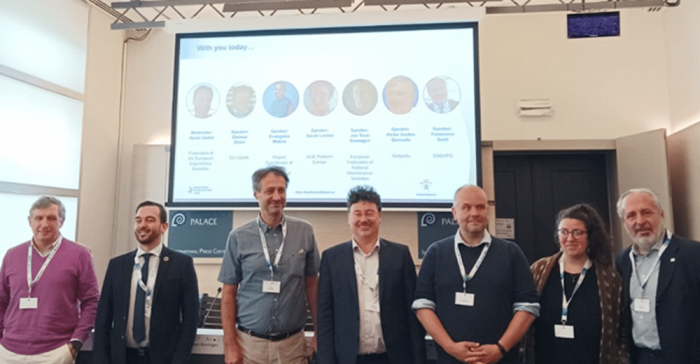
AGE participated in the ‘Healthy Workplaces Good Practice Exchange event’ organised by OSHA, end of May 2025, in Brussels.
The labour market is changing. On top of labour shortages and the changes involved in the green transition, the digital transition is redefining how we work, reshaping jobs and skills requirement. AGE Platform Europe is partnering the “Safety and Health in the Digital Age” campaign launched by the European Agency for Safety and Health at Work (OSHA), aiming to raise awareness about the emerging risks and opportunities posed by digital technologies and to ensure that workers well-being remains at the heart of technological progress.
As the global workforce grows older, the intersection of ageing and digital transformation presents both urgent challenges and powerful opportunities. In today’s fast-paced, tech-driven economy, older workers often face systemic barriers that can sideline their potential. Yet with the right support, digital technologies can also serve as a powerful tool for inclusion and empowerment.
The increased integration of digital tools to workplaces across Europe, have an impact of these technologies on occupational safety and health. There is a need for broader engagement and targeted strategies to foster a culture of prevention that benefits all workers, particularly those most at risk of being left behind.
Ageism and digital exclusion
Ageism remains a persistent challenge in workplace. Older employees are frequently stereotyped as less adaptable or less technologically proficient. These assumptions can lead to reduced collaboration, limited access to training opportunities, and even obvious discrimination. Such exclusion not only undermines the dignity and confidence of ageing workers but also wastes valuable experience and institutional knowledge.
Added to this are psychosocial stress factors caused by rapid technological change. For many, the relentless pace of innovation fosters anxiety, feelings of obsolescence, and a sense of being left behind. The pressure to adapt quickly, often with little or no support, can feel dehumanising, further widening the digital gap within the workforce.
Many workers, including older workers, may find it difficult to access modern tools or lack the digital skills needed to participate fully due to little or no support from businesses and governments. As more and more services and work processes move online, the erosion of offline alternatives risks exacerbating the isolation of those who are not yet integrated into digital systems. It is essential that digital tools remain accessible and affordable, and that digital training continues to be provided on a regular basis within companies. This challenge is not exclusive to older workers. Younger employees, too, can struggle to keep pace with the accelerating integration of digital tools and artificial intelligence. Without a shared digital learning framework within organizations, workers across all age groups may end up acquiring skills in isolation, leading to fragmented knowledge, uneven capabilities, and ultimately undermining overall company cohesion and effectiveness.
Unlocking the potential of older workers through technology
Provided it is implemented with inclusion at its core, digital technology holds immense potential to empower an ageing workforce.
Digital tools offer an opportunity to challenge stereotypes by facilitating intergenerational collaboration and exchanges, through shared digital platforms and mutual learning, fostering more cohesive, resilient teams. Assistive technologies, such as ergonomic hardware, adaptive interfaces, or AI-driven support systems, can also enhance physical comfort, improve accessibility, and reduce workplace strain. Meanwhile, the growing flexibility of digital work environments, including remote or hybrid work models, can support better work-life balance and enables older employees to remain active in the workforce longer and on their own terms.
Moreover, as automation takes over repetitive or physically demanding tasks, the value of human-centric skills, such as communication, empathy, and leadership, rises. These are areas in which many older workers excel due to their experience, and which are increasingly crucial in a digitalised world.
Building a digitally inclusive and sustainable workforce
Structural support is essential to ensure that digital transformation is both fair and sustainable.
First, sustained investment in education and lifelong learning must be prioritised. Older employees need clear, accessible pathways to reskill and upskill throughout their careers to stay competitive and confident in a changing labour market.
Second, digital tools and artificial intelligence systems must be designed to be age-inclusive, avoiding biases that might marginalise older users. Technology should accommodate the diversity of the workforce, not amplify its divisions.
Third, a strong legislative and policy framework is necessary to guide ethical digital practices. This framework must consider both demographic shifts and the accelerating pace of digital innovation, ensuring that no group is left behind.
Finally, employers have a critical role to play. They must engage older workers proactively, offering tailored digital training programs, fostering inclusive workplace cultures, and working in partnership with governments, NGOs, and educational institutions to support ageing workers through the digital transition.
With thoughtful planning, inclusive technologies, and strong institutional support, older workers can continue to contribute meaningfully to the workforce and help shape a future where experience and innovation go hand in hand.
AGE’s involvement in the OSHA campaign aims to highlight the crucial need to adopt a human rights-based and person-centred approach that values workers of all ages, including older workers, and ensures that the benefits of digital innovation are enjoyed by all.
In fall 2025, AGE will publish a new edition of the AGE Barometer, which will explore the challenges and opportunities brought about by the transitions taking place in the labour market, including the digital transition. Based on the findings and recommendations of the AGE Barometer 2023, it will be illustrated with good practices from several Member States and will propose a number of recommendations to support older workers.
Contact