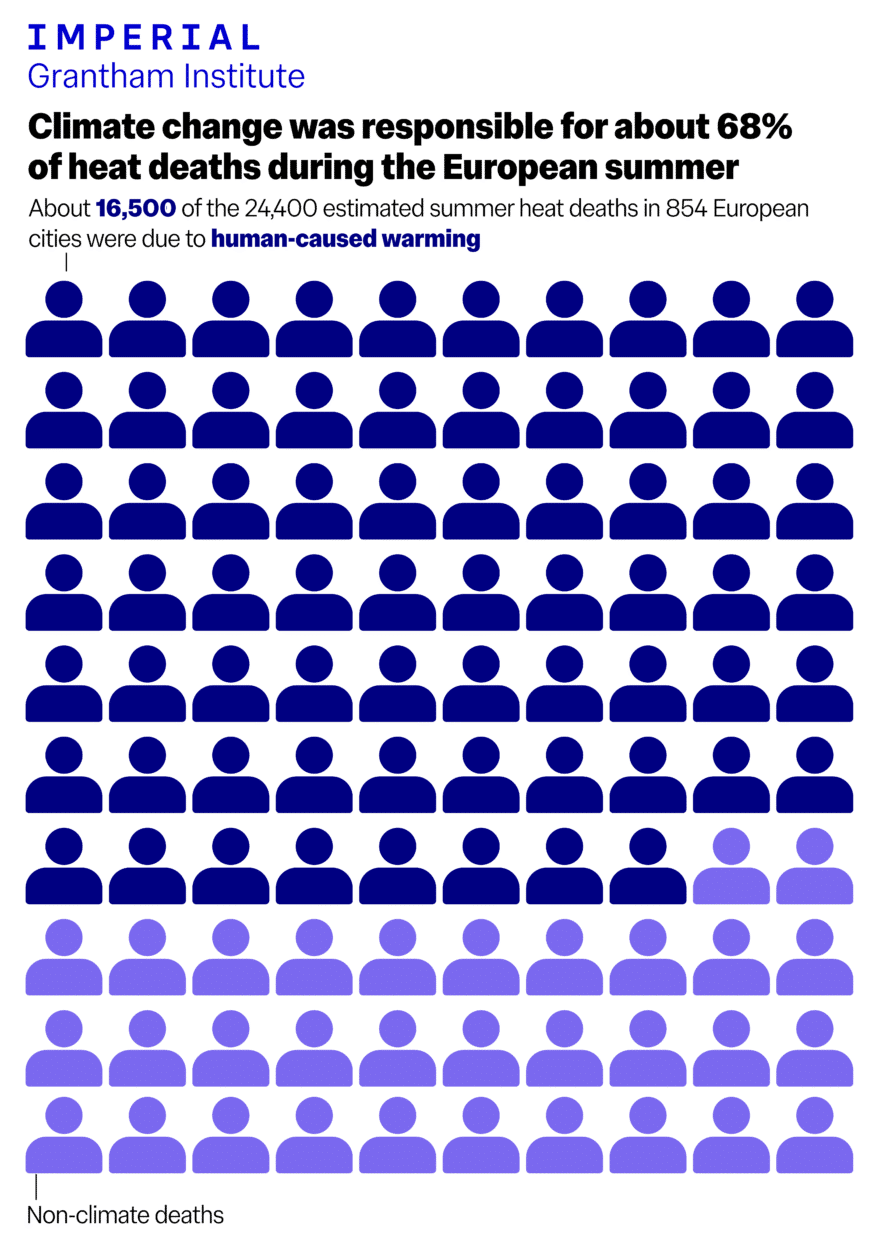
This summer, 85% of excess deaths were among people aged 65 and over, highlighting how hotter summers will become increasingly deadly for Europe’s ageing population. Research from Imperial College London & the London School of Hygiene & Tropical Medicine shows that current heat plans are not enough – we need strong EU climate targets to cut the emissions driving this dangerous heat.
Report Key Points:
Across the cities, climate change was behind 4,597 of the estimated heat deaths in Italy, 2,841 in Spain, 1,477 in Germany, 1,444 in France, 1,147 in the UK, 1,064 in Romania, 808 in Greece, 552 in Bulgaria and 268 in Croatia.
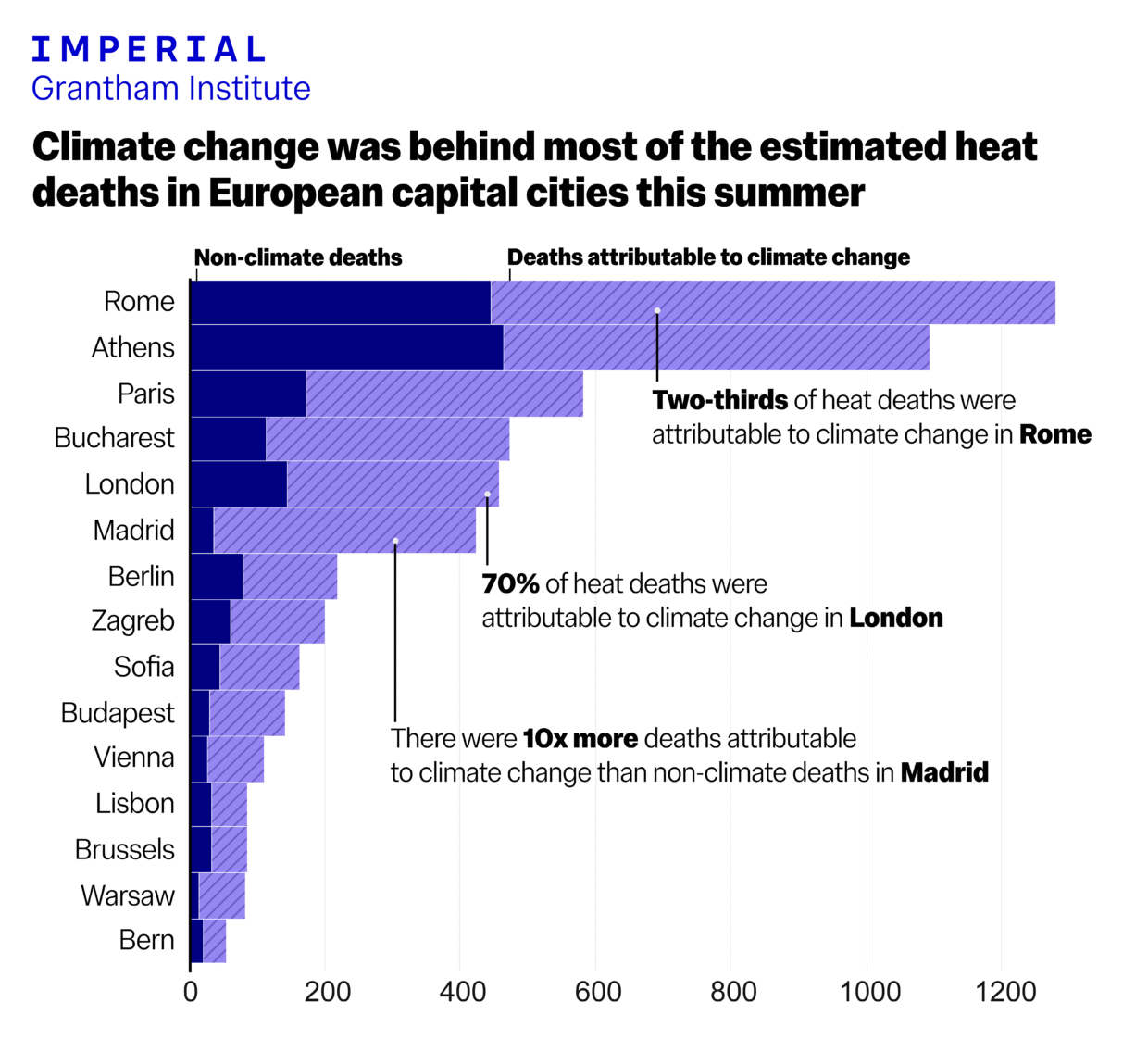
In capital cities, climate change led to an additional 835 heat deaths in Rome, 630 in Athens, 409 in Paris, 387 in Madrid, 360 in Bucharest, 315 in London and 140 in Berlin.
People aged 65 and over made up 85% of the excess deaths, highlighting how hotter summers will become increasingly deadly for Europe’s ageing population.
While policies are needed to protect people from heat, a rapid shift away from fossil fuels is the most effective way to avoid hotter and deadlier summers.
Why are older persons more vulnerable to heatwaves?
While people of all ages suffer during extreme heat, older persons face higher risks of dehydration, illness, and complications. Those in need of care and support are at even greater risk due to disability, limited mobility, illness, and inadequate infrastructure.
What must change?
Heatwave deaths are not inevitable. Solutions exist that take into account the needs of older people, as highlighted in this article by our AGE members.
We urgently need local action plans across the EU that: