
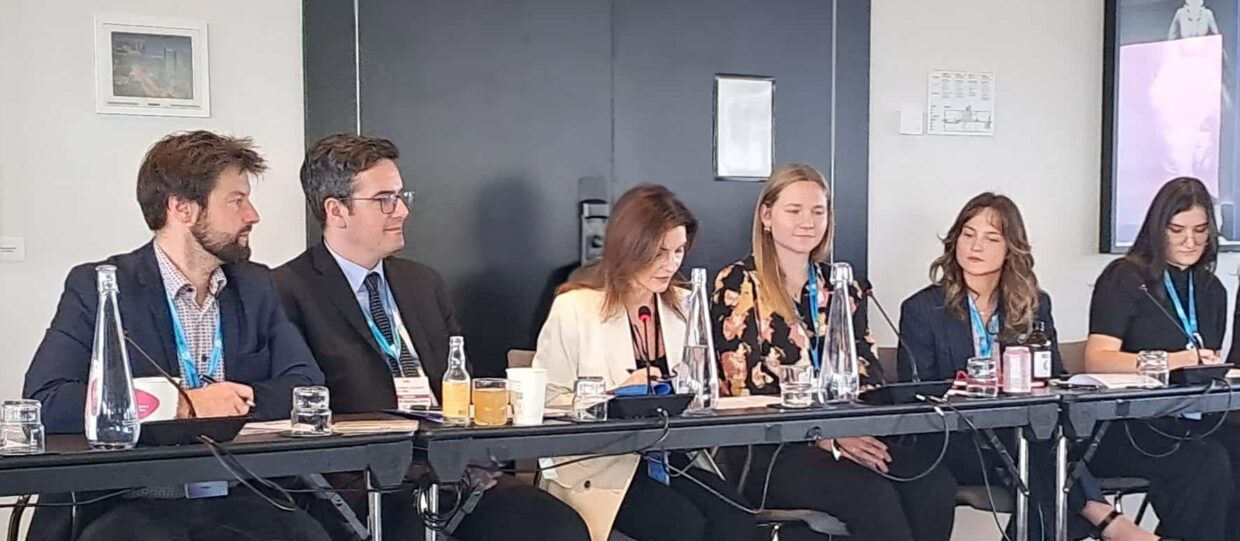
At a special session of the European Cancer Summit 2026 on “Patient Navigation: Addressing the Needs of Older People with Cancer”, AGE Platform Europe joined policymakers, researchers and healthcare professionals to discuss how Europe can better respond to the needs of older people affected by cancer. The session also highlighted the work of the EU-funded EU NAVIGATE project, in which AGE is a partner, as an example of person-centred support for older people with cancer and their carers.
Opening the discussion, Alessandra Moretti, Member of the European Parliament emphasised the need to build on Europe’s Beating Cancer Plan and ensure its implementation addresses inequalities in cancer prevention, diagnosis, treatment and care. She highlighted the persistent barriers older people face, including age discrimination in access to innovative treatments and clinical trials.
Representing AGE, Philippe Seidel, Policy Manager for Social Protection and European Parliament Liaison, stressed that older people must remain visible in both cancer and long-term care policies. He noted that around 60% of new cancer diagnoses occur among people aged 65 and over, yet their specific needs are still too often overlooked.
Philippe underlined that the challenges of cancer in later life extend far beyond medical treatment. Many older people fear becoming a burden for their close ones, and most care is provided by unpaid family carers, while others may have already lost close relatives and struggle to access support. With around 80% of care in Europe provided informally, strengthening accessible, adequate and affordable care services is essential.
AGE calls for a rights-based approach to ageing, ensuring that older people can decide how they live, the care they receive and how they remain connected to their communities. Philippe emphasised that wellbeing is not only about physical health, but about being able to continue doing and being what matters most to each individual. This perspective is reflected in EU NAVIGATE, which supports older people with cancer through patient navigation, helping them access services, coordinate care and maintain their autonomy and quality of life.
On the EU level, AGE calls for an EU Care Deal putting emphasis on continued support towards person-centred care, support for informal carers and a clear earmarking for health of EU funds.
The session also heard from Nicolò Battisti, International Society of Geriatric Oncology, who stressed that older adults are a highly diverse group and highlighted the importance of comprehensive geriatric assessment and personalised multidisciplinary care.
Chelsea Vinckier, Vrije Universiteit Brussel presented results from EU NAVIGATE, demonstrating how patient navigators can help older people and family carers navigate complex health and social care systems. By asking patients “What is most important for you today?”, navigators help ensure care is shaped around individual priorities and needs.
Concluding the discussion, Alexandra Eni, European Cancer Organisation presented draft policy recommendations emerging from EU Navigate calling for stronger person-centred and integrated care, greater recognition of family carers, improved coordination between health and social care services, and equitable access to support regardless of income, place of residence or digital literacy.
The session reinforced a clear message: as Europe’s population ages, cancer policies must move beyond a purely medical approach and address the social, emotional and practical realities of ageing. Through its involvement in EU NAVIGATE, AGE Platform Europe will continue advocating for care systems that uphold older people’s dignity, autonomy and social inclusion, ensuring that no one has to navigate cancer alone.


